
While all eyes are on the men’s World Cup, we want to discuss a very different tournament that shows the stark differences (and opportunities) between women’s and men’s sport, especially football.
There’s a lot of debate about the value of women’s sport right now. But why measure that value only in short-term commercial numbers?
Creating a great and lasting brand can take decades. As Jenni Romaniuk and Byron Sharp demonstrate in How Brands Grow, brands who consistently build mental availability and reach broad audiences over time are better positioned for sustainable growth than those chasing short-term returns.
Our SportOnSocial Global Sports Properties 2026 report proves that the interest is there and it is growing. Search interest in the Women’s Champions League (UWCL) and Women’s Super League (WSL), for example, has increased by 66% and 65% respectively compared with their previous four-year averages. For context, the men’s Champions League grew by 16%; interest in the Premier League declined (-16%).
Women’s football currently has a great opportunity to try new things, discover what works to produce a sport designed for the fans and for the long-term future.
Here’s where World Sevens Football comes in …
What is World Sevens Football?
Think FIFA Street meets WWE, but with elite pro footballers.
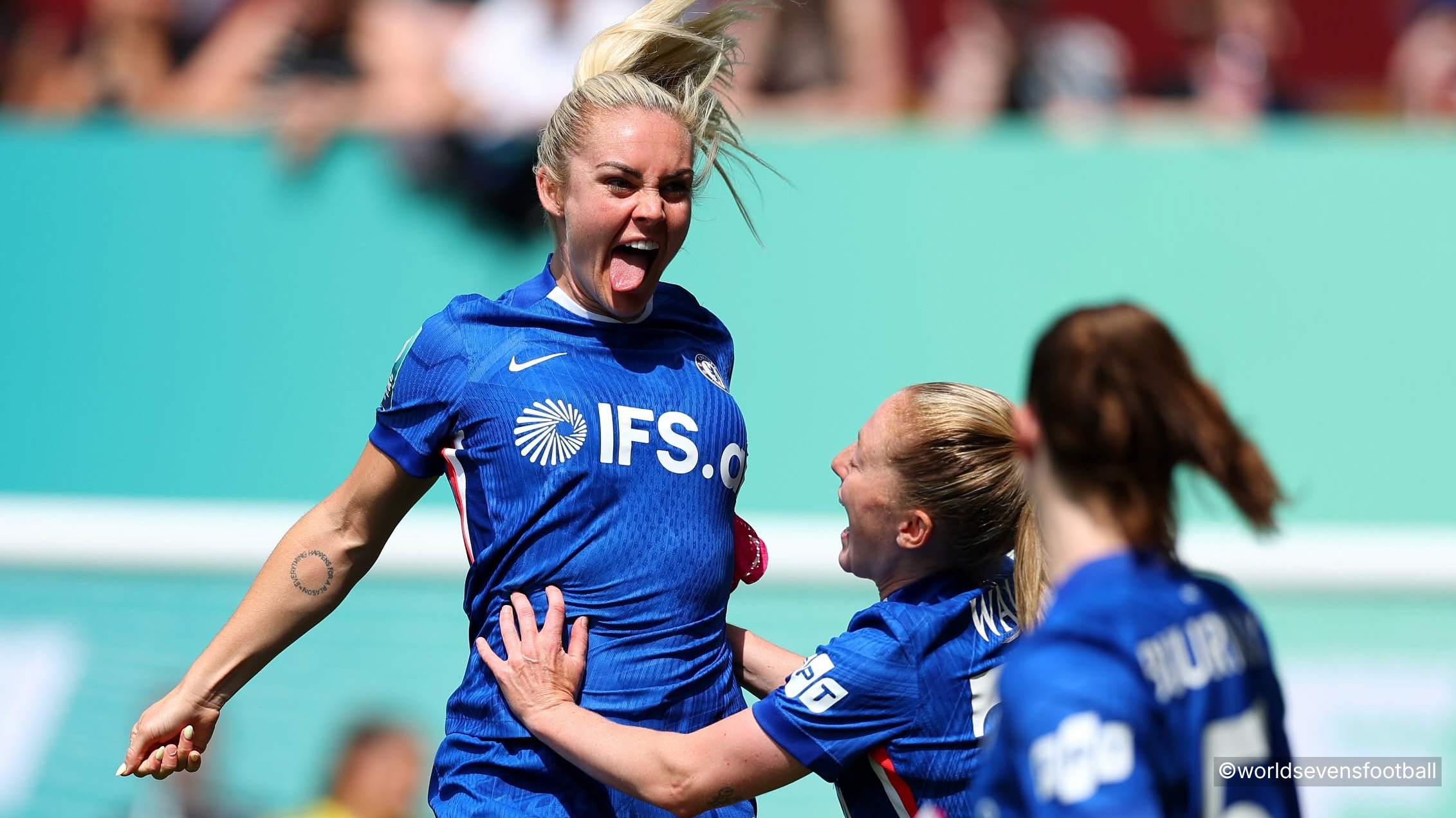
World Sevens Football launched in May 2025 with a simple premise: take elite women’s football and strip it back to its most entertaining form: seven players per side, a half-sized pitch, 30-minute matches, no offside, rolling substitutions. Three tournaments in and it’s already demonstrated there’s an appetite for something different.
The format itself isn’t new; Gerard Piqué’s Kings and Queens Leagues and the Baller League have already gained popularity through entertainment-first, seven-a-side football with ex-players and influencers. World Sevens Football, however, stands out by featuring active WSL, National Women’s Soccer League (NWSL) and top European players – household names you’d see in a UWCL fixture – playing in a format designed to let their personalities shine.
The value beyond money
While the football at the World Sevens is fast and fun, it’s not the main spectacle. The real excitement comes around the team walk-outs with music, dancing, human bowling balls, and even coaches and referees joining in.
A personal highlight … Everton staging a full funeral for Hannah Blundell’s Manchester United career, improvised coffin and all! Could you imagine Premier League players doing that? Not a chance.
Yes, some men’s football fans complained the women’s game wasn’t taken seriously, but that reflects more on the men’s game. The huge audience – in-person and online – sought authenticity and enjoyment, which is exactly what they got.
Such freedom has real commercial value.
Take another example of Ella Toone’s hen-do in Ibiza, shared across social media by her and her elite player friends. Fans loved it. Now, imagine the headlines if a male player posted something similar … the risk would be too high, so the authenticity never follows.
So what?
World Seven’s is a clear example of the value women’s sport offers rights holders, brands and partners – value that doesn’t appear in commercial forecasts.
For example:
- audiences that brands can’t reach elsewhere
- freedom to try activations mainstream sport won’t allow
- athletes with strong or developing personalities
- opportunity to own the category before the market catches up
- higher engagement and crossover into wider culture through female athletes (evidenced by our SportOnSocial research)
- more meaningful community ties that make brand activation feel genuine
- credibility that can’t be bought once the space fills up
- athletes who truly enjoy your events!
The question for every rights holder is straightforward: ‘What is your women’s sport actually offering and are you selling it right?’
What does this mean for rights holders and brands?
Women’s sport properties and athletes are distinctive and should be recognised as such to draw their true value, both commercially and in terms of their impact on audience engagement, flexibility and brand opportunities.
There are various ways to draw out that value.
1. Same sport, different opportunity
Your men’s and women’s sports play the same game, but they attract different audiences, cultures and opportunities. Simply copying and pasting a men’s strategy for women will yield a fraction of the results.
Effective marketing begins with understanding your audience beyond demographics and stereotypes by focusing on their values and behaviours to create a distinctive brand strategy.
The opportunity: women’s sport opens up audiences and brand territory that men’s properties have largely monopolised. With less competition and highly engaged fans, the right strategy now can create a lasting advantage over competitors.
2. Make hard choices
Once you know your audience, develop your strategy. Where will you play and how will you win?
Roger Martin’s choice cascade gives you a framework of five key components:
- winning aspiration
- where to play
- how to win
- capabilities
- management systems
By working through the framework, you will achieve a specific market position. This will guide your team on what to prioritise and what to avoid.
The opportunity: women’s sport is still evolving. Rights holders and brands that make bold, focused choices now, before conventions sets in, will own the most distinctive positions in the market.
3. Bring your strategy to life
Strategy without execution is what we like to call ‘cobwebber’ – something that sits in a file and never gets used. When it comes to women’s sport, tactical execution falls within two key areas.
- Athlete personality: to build personal athlete brands, rights holders need to identify potential, cultivate supportive environments, and give athletes room to express their individuality. Brands must ensure the chosen athletes align with their values before any investment.
- Cultural crossover: female athletes move across sport, fashion, music and lifestyle in a way few male athletes can. A targeted content strategy that maps where your athletes already have influence transforms organic cultural relevance into measurable audience growth.
The opportunity: women’s sport gives brands access to trusted, culturally connected and commercially underpriced athletes. Invest in the infrastructure now and watch those assets compound.
4. Change how you measure success
If you use the same metrics to compare women’s and men’s sport, the former will always look like it’s underperforming. This is due to but measurement issues rather than the reality.
Men’s sport metrics, e.g. broadcast reach and stadium attendance, were designed for a product with a century of scale behind it.
In contrast, women’s sport fosters community spirit which, although smaller in scale, is more engaged, loyal and responsive. Educate your stakeholders, redefine what success looks like, and produce a scorecard that captures quality of connection alongside volume.
The opportunity: women’s sport presents something increasingly rare: an engaged community that hasn’t been overexposed to commercial messaging. The signal-to-noise ratio (the ratio of meaningful message to commercial clutter) is far higher than in men’s sport, so brands that measure connection over eyeballs will find the returns justify the investment many times over.
5. Invest now
The risk is in investing too late. Pioneering deals in women’s football, rugby, basketball and netball have been made but (outside the big four), many women’s properties remain significantly undervalued relative to their audience reach. This gap won’t last.
The opportunity: the future stars of women’s sport are already here, often without the commercial support they deserve. Brands that act early will secure positions that latecomers simply won’t be able to afford.
6. Be patient
Women’s sport might not initially produce the same results as men’s. Successful brands are those that showed up first, were credible, and stayed.
Brands and rights holders need a long-term communications plan in any partnership; a strategy abandoned after one season isn’t really a strategy.
The opportunity: women’s sport rewards patience as audiences become increasingly loyal. The commercial space is less crowded, and brands that build consistent presence now will be the default choice when those audiences reach their full spending power.
If you’d like further information or advice on how to explore the value of women’s sport.
Get in touch

Jess Reus
I am a food-loving, dog-appreciating, hockey player.
My most memorable sporting moment is…
Full on face planting on the Spine Ramp at FISE Montpellier in front of a crowd of 6,000 people and a load of professional Skateboarders...
I am happiest when …
I have food in my mouth.
The sports person that best represents me is …
Kate Richardson-Walsh.
The three things at the top of my bucket list are …
1. Travel around China and Japan
2. Meet Trixie Mattel
3. Learn a second language
A quote I live my life by is …
“They say I'm the Hottest MC in the Game. If you label me that, I will live up to it. Trust me.” – Lil Wayne.
More insights