
Relevance is no longer optional
On 10 June, the IOC announced a new methodology for determining which disciplines make up the Olympic programme. This was ratified at the IOC Session in Lausanne on 24–25 June. The IOC is recommending a discipline-based evaluation to better manage costs, operations and programme relevance, with criteria applied for the first time for Brisbane 2032.
This means that although we have known for a while that the future of several sports on the programme is under threat, some disciplines considered safe may not be either.
The initial screening of disciplines covers issues such as mandatory governance, compliance and ethics. Subsequently, the core criteria each discipline will be measured against include:
- global appeal
- cost and operational complexity
- athlete representation
If global appeal is the primary criterion, then “relevance” takes on a whole new meaning.
On a Redtorch strategy day in April 2022, we came up with our strapline ‘making sport more relevant’. It encapsulated our goal and the focus of our integrated marketing communications work with clients from across the Olympic movement. As it still does today.
Over the last year, “relevance” has been used ever more frequently in presentations and discussions about Olympic sport. It is even in the first line of the IOC press release on 10 June.
But what is it, and what does it mean for International Sports Federations (IFs)? Ask ten federation leaders to define it, and you could easily get ten different answers.
Everyone is using the word, but often misunderstand its meaning
Let’s begin by looking at what “relevance” is not to help clarify a few misconceptions that currently cost IFs both time and money (and which they frequently use to justify global appeal). It’s not about: reach or impressions; posting more content; high engagement at major event moments; more events/competitions; a rebrand or new visual identity.
The problem is that most IFs treat relevance as a vague aspiration rather than something they can systematically build with good strategic thinking and initiatives.
A strategic choice
Strategy is hard. For sport, at its essence (borrowing from the best definition I’ve read by Roger Martin), is a series of interconnected choices that position a sport to win (attention and revenue). There are two key words in this sentence:
- positioning: choosing the one thing you want (your sport) to own in someone’s mind, at the cost of everything else you “could” have claimed. It’s the phase of marketing strategy most often overlooked by IFs.
- win: strategy is about winning. If your sport is not winning, it’s losing. Winning is something most Olympic sports believe they achieve because they are in the Olympic sports programme. The reality is that the growth of the Olympic Games and subsequent quadrennial spike in interest hides the truth, which is interest in many sports is shrinking.
What does relevance mean?
Being a relevant sport means being able to generate future demand because:
- people have a reason to care about it, can articulate why they love it and what it means to them outside of competition
- people who don’t follow the sport closely still feel something when they encounter it
- it occupies a cultural space that cannot be claimed by another sport
- new audiences can find it through something they already care about
- sponsors see what the sport stands for, want to be associated with it, and value the audience relationship beyond the event window
However, most Olympic sports don’t generate future demand as they only deliver communications that serve existing fans, mistaking engagement for relevance.
Relevance is the outcome of intentional strategic choices. Position your sport around one or two attributes it wants to be known for (its meaningful difference). Next, consistently communicate and prioritise that message over time to as broad an audience as possible.
All communications must predominantly connect with new audiences (and enhance engagement with existing fans) on an emotional level. This will create the positive memory associations necessary for someone to have a chance of choosing a sport (over other competing interests) in a moment that matters to them.
These moments are rarely sports events. They’re the parts of life people organise themselves around – the passions, communities and cultural spaces that define who they are. Every sport has the potential to connect authentically into one or more of those spaces. Finding the right one requires working through a strategic process, not guesswork.
Get it right and you unlock an audience significantly larger than your current one. This potential audience consists of people who aren’t yet aware of your sport simply because no one has reached them in the right way, in the right language, in the right place.
This is a great opportunity for IFs. It’s what the IOC will be looking for when it analyses “global appeal” to decide which sports stay on its Olympic programme. It’s what Redtorch surfaces through its behavioural insights tool SportOnSocial.
How IFs can make relevance work for them
Building relevance does drive short-term growth but its impact compounds over time – brands are built over years, not months. Here’s some of the research evidence behind how it works.
The Ehrenberg-Bass Institute’s 95:5 rule is a useful starting point. The exact split varies by category, but the principle holds: at any moment, only a small fraction (5%) of your potential audience is actively interested. The rest (95%) are “out-of-market” and currently invisible to most Olympic sport marketing.
Relevance is what makes that 95% reachable and pushes them “in-market”, giving an external audience a reason to stop, pay attention, and find your sport.
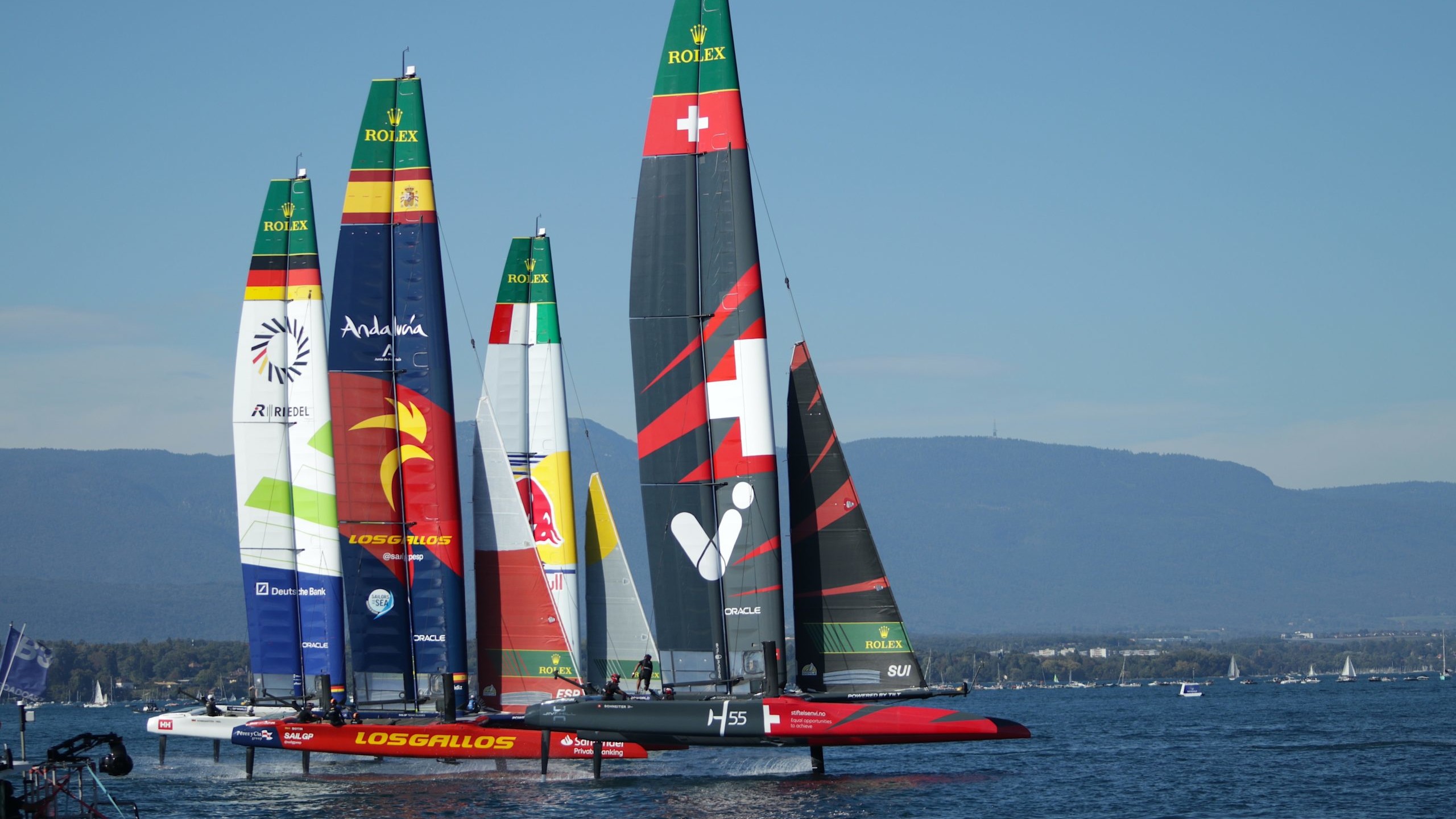
SailGP is a good example of how to create relevance amongst new audiences. The brand is built on clear choices: extreme speed and technology (think F1 on water) and sustainability. Attributes that make the sport relevant to people who have never followed sailing – the 95%.
It’s one thing to identify your target audience(s) through good segmentation and targeting, and learn how to position a sport to increase relevance and capture attention. Knowing how to reach them is another thing. This is where relevance works in a different, equally important way.
In 2013, Les Binet and Peter Field published what became one of the most cited pieces of research in marketing: The Long and the Short of It. Their findings were clear: advertising achieves optimal impact when roughly 60% of communications is brand building through emotional creative targeting new audiences; 40% of communications is short-term sales activation built around rational, transactional messaging to drive immediate response from those in-market (in sport = existing fans).
The 60:40 split isn’t a fixed formula. Binet and Field themselves have said it shifts by category and brand maturity. One of the clearest drivers of that shift is purchase frequency: the less people buy or engage with something, the more of the mix needs to go on brand building. Most fans engage in Olympic Federation events once every month or every few months if you’re lucky. That alone suggests the right split for International Federations is higher than 60:40. Check out our email series ‘The Value of Being Remembered’ in which we explore the lifecycle of attention in sport, how it evolves and how memory creates lasting value.
The communications mix across International Federations is typically the inverse as 80 to 90% is short-term activation: rational, transactional, event-led, focused on existing fans. If your marketing budget follows your event schedule, you’re underinvesting in brand building and relevance. And because people only rarely engage with your sport, brand building is exactly where you can least afford to underinvest.
The classic Olympic Federation communications mix is starving their sport of the emotional oxygen it needs for audiences to engage. The outcome? Interest weakens between events, spikes briefly at Games-time, then disappears … and so the cycle continues.
Despite some smart thinking and good people behind it, Grand Slam Track is a recent example of getting the balance wrong. It skipped straight to rational, event-focused communications without first giving people a reason to care (beyond existing athletic competitions). There was no emotional oxygen, no memory structure, nothing distinctive or relevant. It wasn’t memorable, and it failed to capture hearts, minds or eyeballs in its first season.
By contrast, ATHLOS is a new athletics rights holder getting the balance right. Founded by Alexis Ohanian, its position is built on two simple ideas: women and empowerment. Every part of the product has been built to deliver on that position. Female athletes only, given a stage built entirely around them. The stage isn’t a traditional athletics track. It’s Times Square for the long jump, concerts built into race night, prize money and moments designed to make these athletes feel and look like stars.
The result is a modern, dynamic and memorable cultural event rather than the traditional representation of the sport people associate with athletics. By using two simple words – women and empowerment – and delivering them consistently through the experience, it’s not just a claim in a strapline. It’s clear brand thinking.
The solution
The solution is to rebalance towards brand building instead of choosing between brand building and event activation.
The commercial argument
Audiences that feel a stronger connection to your sport will attend more events, spend more, advocate more, and be more receptive to sponsor messaging.
Research indicates that stronger brands can charge more. In sport, this equates to higher hosting, broadcasting and sponsorship fees, and ticket prices.
This is why rebalancing the communications mix isn’t a brand decision (or merely to satisfy the IOC) but a commercial one. Relevance is what transforms audience growth into revenue growth.
The political challenge
Extra investment in brand building to increase relevance is hard because:
- the returns take time to materialise
- attribution is harder (unlike short-term activations delivered via performance marketing)
- there is always pressure to deliver immediate results
This is especially difficult in the political environment of Olympic sports. A newly elected President or Secretary General needs to show impact fast. Long-term investment to increase relevance doesn’t appear in the next quarter’s numbers.
But relevance can be defined, built and measured using brand trackers that may integrate mental availability scores, branded search volume between Games, and even sponsor acquisition and renewal rates (a lagging indicator).
How can sports think like brands?
By putting “global appeal” at the top of its criteria, the IOC has done IFs an unexpected favour by forcing every sport to think like a brand. And brand-thinking is what builds the relevance that drives global appeal, secures your sport’s future, and makes the Olympic Games better for having it on the programme.
What next?
Every Federation leadership team should be able to answer the three questions below to explain how their sport will become more relevant, generate global appeal and grow future demand (for their sport and for the Olympic Games).
- what do we want our sport to be known for and what are we willing to stop doing to own it?
- where exactly are the cultural spaces our sport could authentically connect into?
- what percentage of our marketing budget is focused on brand building and reaching new audiences vs rational event-focused communications that serve only the needs of our existing fans?
If you can’t answer all three questions, there’s a gap in your strategy as well as your communications.
Once the IOC ratifies its new methodology on 24–25 June, the questions will shift from being the right strategic questions to ask to being fundamental questions that must be answered to keep your sport/discipline on the Olympic programme.
Get in touch if you’d like more information or are ready for us to help you address any strategy gaps.

Jonny Murch
Family-man and entrepreneur. Loves a BBQ on the beach with friends (whatever the weather) as much as running across the North Downs (whatever the weather) with Meggie (my dog) by my side.
My most memorable sporting moment is …
Spectating: the 2003 Rugby World Cup final, watching Jonny Wilkinson’s drop goal sail through the posts, made better through watching it in the Walkabout bar in Covent Garden.
Participating: lining up for Auckland University Colts in my first game in New Zealand back in 1997. It was one of those moments where you step up and be counted or get stepped on. Thankfully I chose the former.
I am happiest when ...
On skis – water or snow – doesn’t matter. Ideally with my family in tow.
The sports person that best represent me is …
Richard Hill (former England Rugby No. 6) – nothing flash, quietly going about his business delivering high performance and inspiring those around him.
The three things at the top of my bucket list are …
1. Visit Mount Everest basecamp
2. To windsurf after work every day in the Summer
3. Learn how to play the Ukulele
A quote I try to live my life by is ...
"Champions do extra."
More insights